
Who am I to speak on behalf of the peasantry? A reflection about my role as a researcher.
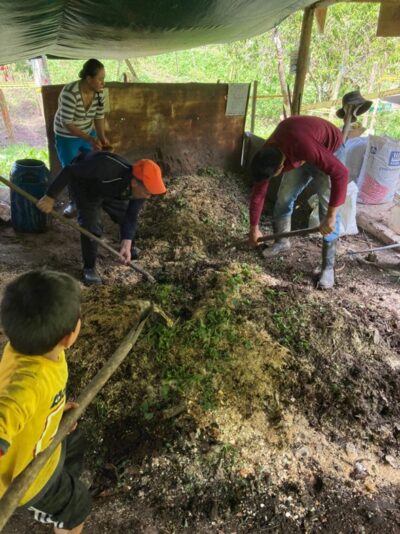
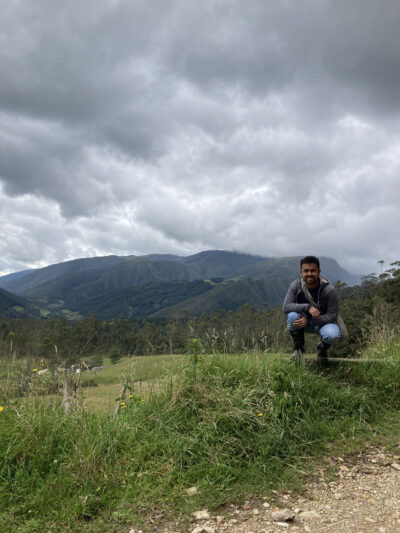
My name: Francesco Londoño. I was born in Boyacá, a state nestled in the Eastern Colombian Andes. My studies: geography as a bachelor and currently a master’s in environmental sciences. Though I’ve also learned a great deal from a more practical school: the peasants.
As a researcher—a word that still feels unknown to me—I’ve been asked what my role is in the peasant communities I’ve worked with and built intimate friendships with. When I try to answer, the first thing I feel is a sense of contradiction. On the one hand, I feel capable of speaking for those who’ve trusted me enough to include me as one of them. On the other, I feel like I’m being abusive by trying to tell their stories, making theirs into mine. The question is always: Who am I to speak on behalf of the peasants—some of them my friends, dear friends, with whom I’ve worked?
Finding the truth
I take this text as a chance to speak to myself and in doing so, I will try to explain to my peers and friends who ask me. I hope to get to the point, but I don’t promise to be concise. On the contrary, I want to show myself in my incoherence. I have to say that as time passes, I’m less and less afraid of being incoherent. I like contradicting myself and not taking for granted any truth I’d already built. In fact, I think that being a researcher is basically that: showing myself as a white in the black, or a black in the white. Or maybe a gray.
My idea of being a researcher has never been about finding the truth. On the contrary, it’s about listening to truths and trying to understand them critically. But critique isn’t the truth either. To understand that truth is based on belief—and that beliefs are a driving force of life—is to learn that the limits of critique are the same as those of ethics. You can be critical until it doesn’t undermine the life forces of the people behind the truths.
Listening and commitment
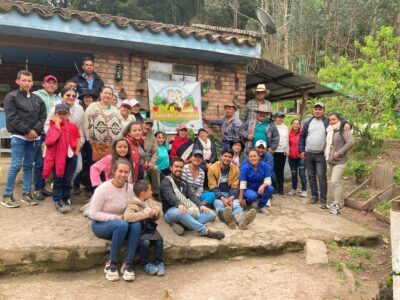
However, as a friend being a researcher, I don’t know where critique ends. I believe that listening is more important than reflecting. Usually, I don’t want to be a researcher while I’m being a friend, but I also usually get confused. It’s hard for me to distinguish when I should analyze and when I should support unconditionally. To what extent does my critical reflexivity turn into an endless pursuit of perfection in everything, even in my friends?
So, the question is: What would Francesco learn from friendship, and what from research? I don’t think this can be answered in a bullet points format. However, I highlight one commonality and one divergence. In that order: listening and commitment. From Francesco the friend, I learn as a researcher that it’s better to listen. From Francesco the researcher, I un-learn as a friend that it’s better not to commit to any single truth—not even your own. As a friend, I often give faith to the truth that is built together.
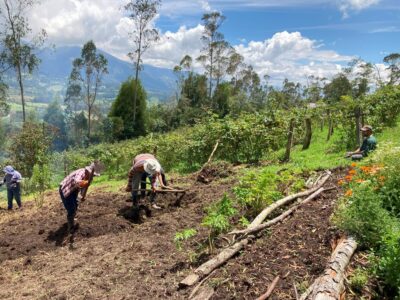
To anyone who asks me, I’ll say that being a researcher should increasingly resemble being a friend: more closeness, more caring, more listening. Less subject-object, more subject-subject. But if someone asks me what it means to be a friend, I don’t know what I’ll say. Nor do I know if, as a researcher, I can always speak about what I hear. As a friend, you usually don’t. On the contrary, trust is based on not sharing certain confidences.
So then, who am I to speak of the peasantry? Am I a researcher or a friend? White or black? Gray? The only thing I could tell you is that, as a researcher, my commitment is to listen. After that, I’ll figure out who I am and whether or not I can speak for you (dear peasant friend).